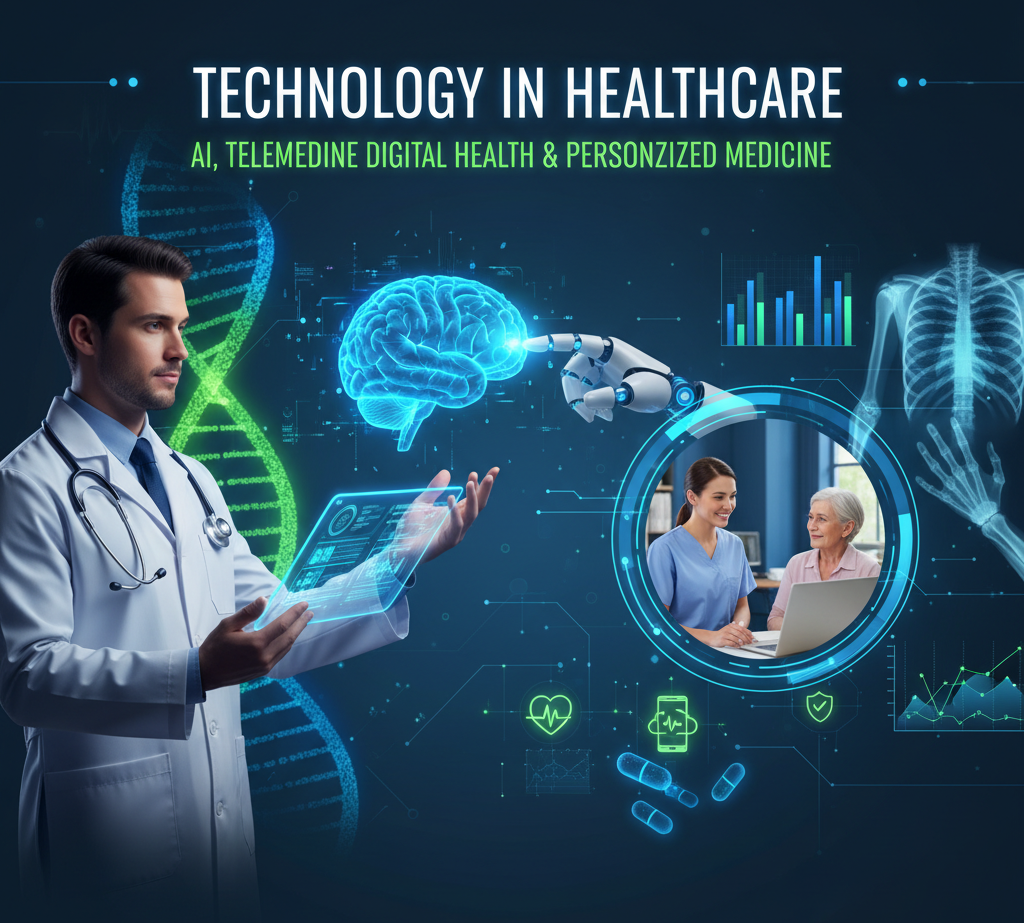
The healthcare industry is undergoing a technological revolution. From AI in healthcare and digital health platforms to telemedicine and personalized medicine, technology is reshaping patient care, medical research, and hospital operations. These innovations not only improve outcomes but also make healthcare more efficient, accessible, and patient-centered.
AI in Healthcare: Smarter, Faster, and More Accurate
Artificial intelligence (AI) and machine learning are transforming how doctors diagnose and treat patients. AI algorithms can analyze medical images, identify early signs of diseases like cancer, and even predict potential health risks.
- Predictive analytics helps hospitals forecast patient admissions and manage resources effectively.
- AI-powered decision support assists physicians in choosing the most effective treatments.
- Personalized medicine uses AI to tailor therapies to a patient’s genetic profile, improving success rates and minimizing side effects.
Telemedicine: Healthcare Without Borders
Telemedicine has become a cornerstone of modern healthcare. Patients can consult doctors remotely via video calls, reducing travel time and increasing accessibility. This technology is particularly impactful in rural and underserved regions.
- Virtual consultations save time and reduce healthcare costs.
- Remote patient monitoring through connected devices allows doctors to track vital signs, glucose levels, and heart health in real-time.
- Mobile health apps help patients manage medications, appointments, and chronic conditions from home.
Digital Health Platforms and Electronic Health Records (EHR)
Digital health platforms and electronic health records (EHR) are central to modern healthcare infrastructure. They streamline patient data management, improve communication among medical professionals, and reduce administrative errors.
- Secure cloud-based EHR systems provide instant access to patient histories.
- Integration with AI enables faster diagnosis and better treatment recommendations.
- Patients can engage directly with their health data, increasing involvement in their care.
High-value SEO keywords: digital health, electronic health records, EHR systems
Robotics and Automation: Precision and Efficiency
Robotics and automation are enhancing surgical precision and hospital workflows.
- Surgical robots enable minimally invasive procedures, reducing recovery time.
- Rehabilitation robots assist patients in physical therapy.
- Automation in pharmacies and labs minimizes human error and speeds up processes.
Wearables and Mobile Health: Preventive Care at Your Fingertips
Wearable devices and health apps empower patients to take control of their wellbeing. Devices track activity, heart rate, sleep patterns, and more, while apps provide personalized health recommendations.
- Promotes preventive healthcare and reduces hospital visits.
- Enables continuous monitoring for chronic conditions like diabetes and heart disease.
- Integrates seamlessly with telemedicine platforms for real-time feedback.
Genomics and Biotechnology: The Future of Personalized Medicine
Advances in genomics and biotechnology are revolutionizing disease treatment. Gene editing, targeted therapies, and regenerative medicine make personalized treatments possible, offering hope for genetic disorders, cancer, and rare diseases.
- CRISPR and gene therapies allow precise interventions at the DNA level.
- Biotechnology drives innovations in vaccines and regenerative medicine.
- Personalized medicine ensures treatments are effective and minimize adverse effects.
Cybersecurity: Protecting Patient Data in a Digital Era
As healthcare becomes increasingly digital, cybersecurity is paramount. Hospitals and clinics handle sensitive patient data, making them targets for cyberattacks. AI-driven security solutions, encryption, and secure cloud storage protect patient privacy and ensure compliance with regulations.
Conclusion: The Future of Healthcare is Digital
The integration of AI in healthcare, telemedicine, digital health platforms, and personalized medicine is redefining modern medicine. These technologies not only enhance patient care but also make healthcare more efficient, accessible, and predictive. As innovations continue to emerge, the future of healthcare promises a smarter, faster, and more personalized patient experience.